
A Lifetime of Impact Begins at Northwestern
Daniel Druckman (PhD '66) reflects on his time in Northwestern's Department of Psychology
Northwestern Psychology, 60 Years Ago 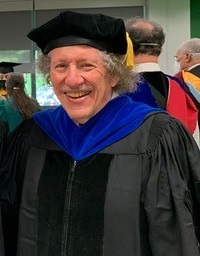
I arrived in Evanston in August 1962 as a transfer PhD student from Duke University. My first-year graduate experience in sociology at Duke was rewarding, except for one critical factor – Duke was a segregated university. Searching for alternatives landed me at Northwestern’s psychology department. I traded a James B Duke Fellowship for a research assistantship on Don Campbell’s ethnocentrism project. Work on the project – with Bob LeVine at the University of Chicago as the co-director – was exuberating. I shared a research office in 309 Kresge Hall with Dick Rozelle; Irene Nolte, Don’s clerical assistant, got the window view. But I also needed to fulfill the course and comprehensive exam requirements of the department. It did not take long for me to realize that the department was more than Don. My other teachers were extraordinary scholars as well. Here is a sampling of my student experiences.
Department structure
NU psychology was a small department of about 10 faculty members. The lack of breadth in coverage was offset with considerable depth in a few areas of psychology. The faculty was anchored by two very different larger-than life figures – Don Campbell and Ben Underwood. Don’s appetite ranged from abstract epistemology and philosophy of science to innovative methodologies that transcended the methods confines of any sub-discipline. Ben’s discipline produced an enormous output of experiments on verbal learning and retention. Ben had the advantage of several experimental psychology colleagues. Don was the lone non-traditional social psychologist. Add to this a decision to farm out clinical psychology and the result is a skewed balance (in the shape of the right-skewed F distribution) toward experimental psychology – even the statistics training was geared toward experimental design and analysis.[1] As a result, the department was largely directed by a hegemonic leader, Ben Underwood. More importantly for social psychology students, the social comprehensive exams shared questions written by the experimental faculty.
Learning about learning
Two required courses on learning theory and research were taught by Ben Underwood and Win Hill. Required reading for Ben’s course was his 1957 book on Psychological Research. His lectures and assignments were about research on verbal learning. The course substance on verbal learning was disguised by the course advertisement on research methods. All we could do was rise to the challenge of mastering a sufficient slice of the verbal learning literature to produce the kinds of experimental designs that would resonate with Ben. In mild “rebellion” I later wrote a 1982 book, co-authored with Dick Rozelle and Jim Baxter, on nonverbal communication.
Required reading for Win’s course was the 1961 textbook edited by Gregory Kimble, Hilgard and Marquis’ Conditioning and Learning.” No subterfuge here. Win stuck to this terrific book in his lectures and assignments. The text and the lectures were thorough and insightful. I still occasionally turn to this book when in need for wisdom from the heyday of learning theory. At the time, Win was writing his own book, Learning: A Survey of Psychological Interpretations”(first edition, 1963). I was fortunate to have had Win chair my dissertation committee in Don’s absence.
Another faculty member, the dapper Carl Duncan, was an important part of the department. He taught seminars on problem-solving and served as an essential source of guidance to students in their job searches.
It’s All About ANOVA
Al Erlebacher was the master of statistics. His course was on experimental design and used the excellent 1962 textbook by Allen Edwards Experimental Design in Psychological Research. Edwards was a 1940 Northwestern PhD, preceding Ben Underwood’s arrival by six years. His book moved from simpler significance testing through more complex factorial and randomized blocks designs to the eloquent Latin Squares designs. Al was a master in communicating the intricacies, chalk in hand and colorful suspenders to hold up his pants. My learning from Edwards and Erlebacher permeates my own 2005 textbook on Doing Research (Sage) and the back-to-back methods courses I taught for a decade at George Mason’s Institute for Conflict Analysis and Resolution. Through the years I learned that it is not all about ANOVA. And, yet, I treasure the development of expertise in that technique.
A Long and Impressive History
Who was better to teach us about the history of psychology than Robert I. Watson. Trained in clinical psychology and a writer of books on child psychology, Watson was a cataloguer of literatures and contributions made to psychology through the millennia. His office in Kresge Hall was a carefully organized library of sources that captured the history of a field. That library was the basis for his very readable 1963 book, The Great Psychologists: From Aristotle to Freud. Too bad he did not extend the coverage to modern-day psychologists including members of his own faculty. Bob’s habit of chain-smoking surfaced as well during his class lectures: We remember the deep inhale after he compared John B Watson’s Ana with Freud’s Peter – and seemed to catch himself at another meaning of the comparison. He lectured from the notes for his book but assigned Boring’s gigantic treatment of history. This is an example of a case where the author’s name fits the reader’s experience. Bob moved on to the University of New Hampshire where he found more appreciative colleagues.
Campbell I (D15) and Campbell II (D16)
Don Campbell’s graduate teaching load consisted of back-to-back classes that became known as Campbell I and Campbell II. The former was taught to large classes in University Hall. It was his version of social attitudes – the topic of his own dissertation. My lasting take-away from the class was a pair- comparison technique developed by Guilford in his 1950 book on Psychometric Methods. I have adapted this technique in projects on ethnocentrism, negotiating flexibility, and, most recently, on partisan identification. The latter course, taught in Kresge Hall, was a broad overview of psychology as a science featuring Campbell’s chapter in the Koch volume 6 of Psychology: The Study of a Science” (1963). We read and reviewed all the chapters in this 791page book. This was the course that gave students a profound appreciation for where psychology was situated in the social sciences. But, my appreciation for inter-disciplinarity came primarily from work as the RA on the cross-cultural ethnocentrism project. The deepest connections made were between psychology and anthropology, helped as well by a course on comparative research with Raoul Naroll. It also came from my work with Harold Guetzkow in political science.
My Peer Group
Graduate school is enriched by sharing the experiences with a peer group. The ’62-’66 cohort was impressive as students and through the run of their careers. In addition to my office mate, Dick Rozelle (University of Houston), my peers included: Bruce Ekstrand (University of Colorado), Roger Dominowski (University of Illinois, Circle), Pat Laughlin (University of Illinois, Champaign-Urbana), Barry Collins (UCLA), Bill Wallace (University of Nevada, Reno), Gordon Wood (Michigan State), Bob Kapche (California State University Long Beach), Lou Mondy (Planned Parenthood) and Dave Holmes (University of Kansas). A highlight of our shared experience was the ping-pong matches in Scott Hall following our statistics class.
Graduate Education as a Foundation for a Career
Graduate school makes a difference! The kind of education we get sets the stage for the careers that we develop. In my case, graduate education instilled essential skills, facilitated adaptability to change, and gave me resilience when needed. With regard to skills, I had a dual advantage of acquiring analytical skills and broad visions of social science. I became a scientist and a philosopher. On adaptability, I learned to move comfortably among various social science disciplines and felt at home with psychologists, sociologists, and political scientists. These are the fields that we attempt to integrate for the newer discipline of conflict analysis and resolution. Resilience has come in handy at numerous junctures along the career path. It gave me hope when my submissions suffered brutal reviews. Ben Underwood’s realization in the days after a rejection helped with coping: Day 1: anger at reviewers for misreading the paper; day 2: OK they make a few useful points; day 3: need to admit that they did pick up on flaws in the argument or design; day 4: perhaps we should outline a possible revision; day 5: thanks to the reviewers for saving us from embarrassment. Realizing that we have limited control over our careers, even as tenured professors, resilience helps weather the inevitable storms that erupt often within academic units. NU psychology gave me first-hand experience with internecine conflict among faculty members, leading me to opt for a nine-year research career at a Chicago-based institute.
Know that you are in a place with a glorious history. Know also that you are making the future that you may want to document when you reach the reflective stage of your lives.
Dan Druckman, class of ‘66
[1] An irony is that this decision was made by the then department chair Bill Hunt, trained as a clinical psychologist.